

Phobia Psychology
Quick Overview
How is a Phobia Created?
The Brain During a Phobia
Quick Overview
What is a phobia?
Definition
A phobia is an overwhelming and debilitating fear of an object, place, situation, feeling or animal. It’s an irrational fear of or aversion to something.
Simply by defining a phobia we immediately ascertain a few things:
- Phobias are extremely wide-ranging with just about anything having the potential to become a trigger
- It’s an irrational fear. Therefore, we know the conscious rational mind has little influence
- It’s uncontrollable and debilitating to a sufferer
Phobia Symptoms
- Cognitive – Irrational or out of proportion fear or anxiety triggered by an object, place, situation, feeling or animal.
- Behavioural – avoidance of the phobia trigger
- Physical – increased heart-rate, sweating, dizziness nausea and other physical symptoms of panic and the “fight or flight” response
Types of Phobias
Phobias are very wide ranging but there are two main categories used to subdivide them
Specific or Isolated Phobias
As the name suggests, these phobias revolve around a specific trigger. The trigger could be an object, animal, situation, place, or activity. These types of phobias generally begin in childhood. As a person gets older the phobia may become less pronounced, but it may also intensify with age for some.
Animal phobias – dogs, spiders, snakes or rodents
Environmental phobias – heights, the dark or storms
Situational phobias – visiting the dentist or flying
Bodily phobias – blood, vomit or having injections
Complex Phobias
Complex phobias aren’t specific to any one thing. They normally develop in adulthood and are generally linked to anxiety of a particular situation or circumstances. The most common complex phobias are social phobia and agoraphobia
The Pattern Matching Mind
The principles of pattern matching are key to understanding how the phobia establishes itself psychologically. We’re constantly receiving a vast amount of information through our senses every second of every day. Naturally, not much of that information will reach our conscious awareness. That’s simply not practical as it would severely impair our decision-making ability. So, the mind has a clever way of sorting and filtering through the data that comes in without us having to give everything much thought. In fact, it’s estimated that only about 2% of the information ever reaches our awareness at all!
It’s the subconscious part of the mind that has the responsibility of analysing data that’s received, subsequently providing an appropriate response given the situation you find yourself in at the time. The subconscious is a pro at pattern matching. For the most part, it does a pretty good job as it drives unconscious automatic behaviours – like stretching out to shake a hand that’s been put before you. Pattern matching isn’t possible without something to match to, so the subconscious mind operates with the assistance of a huge library of reference material. A library full of templates that have been constructed from our experiences, but also includes “hard-wired” templates we were born with.
The Phobia Template
We’ve established that the subconscious pattern matches all the time but we’re constantly learning and experiencing new things. Therefore, the mind never really stops creating templates to refer back to when required. Also, because the subconscious is there for our self-preservation, it will tend to look at things from a worst-case scenario – better safe than sorry so to speak. Therefore, it will err on the side of caution when analysing data that comes in. The phobia template is created through a process of conditioning or associative learning and maintained through operant conditioning.
Classical Conditioning
This is a learning process where the mind learns to associate a neutral stimulus to an unconditioned response. This is much easier to explain with an example like the one below.
Infants and toddlers instinctively look to their parents for guidance as they begin to learn how to navigate a precarious world. One day the toddler sees a spider (neutral stimulus) but thinks nothing of it. Mum and dad then walk into the room and in an instant, their response to the spider is panic and fear. The parent’s reaction (unconditioned response) is enough to elicit fear and concern in the toddler and an association is then formed leading to the creation of a phobia template. The next time there’s a pattern match and the toddler comes across a spider (now a conditioned stimulus) fear is triggered (conditioned response). This process of learning has always been important to our survival as it keeps us away from danger. However, when irrational fear becomes unmanageable and is accompanied by avoidance, we’re now in phobia territory. Furthermore, once created, the template is there to stay unless treated.
The memories associated with a phobia template are not processed in the same way as ‘normal’ less stressful memories. Effectively they are kept close to the emotional fear hub of the brain and don’t tend to fade in the same way. Remembering a significant phobia response can often seem like it happened yesterday, when in fact years have already gone by.
Operant Conditioning
This is about how a phobia is maintained throughout a lifetime once the phobia template is created. Sticking with the example above, the toddler is now aged 30 with severe arachnophobia. Their condition has never faded and may have even worsened as they got older. Why? Here are a couple of reasons:
- The phobia gets reinforced through subsequent encounters that are difficult for the phobia sufferer. Each time the phobia template was matched, they experienced extreme fear. It is as if the response itself validates the need for it subconsciously
- Avoiding a phobia trigger is a symptom of any phobia. Avoidance simply maintains the phobia itself. It can even strengthen the phobia template as it fits the subconscious narrative that the stimulus is truly a danger and worth avoiding at all costs. Avoidance may temporarily reduce the associated anxiety, but it only ends up reinforcing the phobia
Section Summary
In summary, phobias are created through conditioning or association and maintained through a process of operant conditioning that can last a lifetime if left untreated.
The Brain During a Phobia
The Limbic System
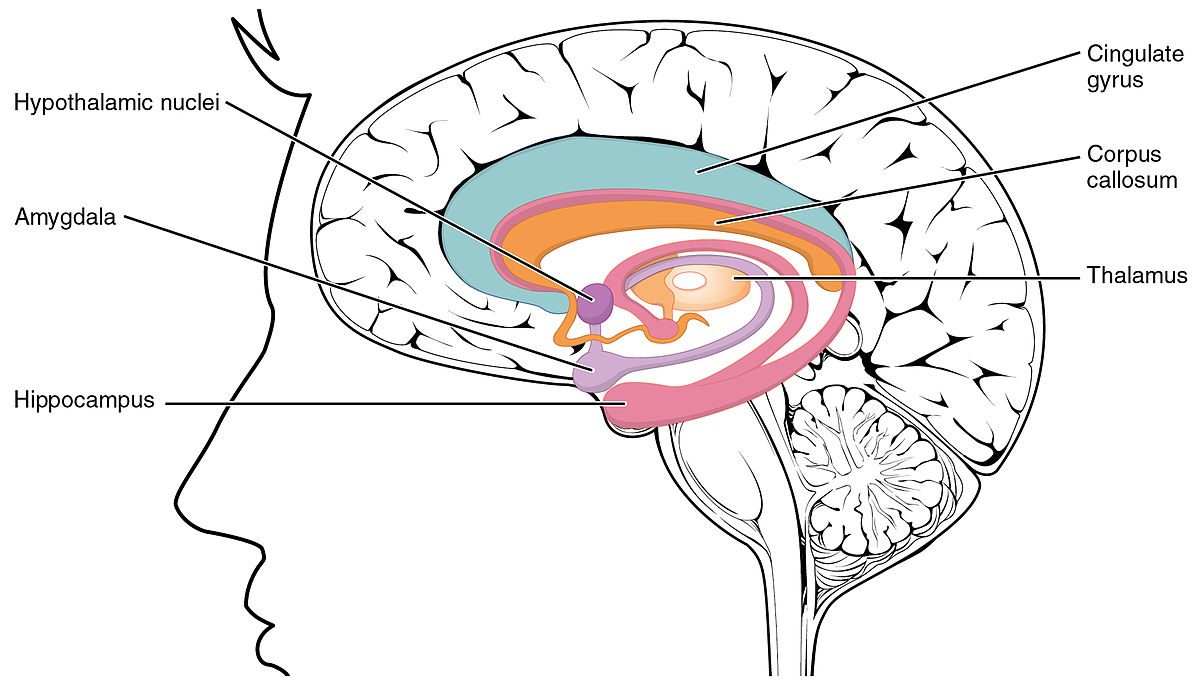
The limbic system is the part of the brain that deals with emotions and memories. It’s located below the neocortex (the grey matter that makes up most the brain). It’s made up of four main parts – the Amygdala, Hippocampus, Hypothalamus and the Thalamus. When it comes to phobic responses, the Amygdala and Hippocampus are major players.
The Amygdala
The Amygdala is a collection of nuclei that form an almond-shaped cluster that we have on each side of the brain. Together they are called the Amygdalae. This is the emotional fear centre of the brain that has a strong connection with emotional learning. It plays an important role in creating and storing memories of emotional events. It’s also the primary structure in the brain responsible for triggering the fight or flight response. The process of learning conditioned fear starts here. For example, we touch the hot stove once and learn not to try it again. Phobias are also a conditioned fear but on the other end of the spectrum and must include symptoms of impairment and avoidance too. Think of the amygdala as an observer, constantly on alert and ready to trigger the fight or flight response if it perceives any environmental dangers. It’s the ‘pattern matcher’ and has the ability to send and receive memory information from other important areas of the brain such as the hippocampus.
The Hippocampus
The hippocampus plays important roles in the consolidation of information from short-term memory to long-term memory. This is the huge pattern matching library where the templates are stored. As mentioned previously, a phobia template is a collection of conditioned memories. But unlike regular memories, phobia memories don’t go through the normal process of contextualization in the brain. This means they’re always fresh and on hand for the amygdala to refer to. These are memories that represent a perceived threat to your wellbeing, so it makes sense that don’t fade with time.
Fight or Flight?
The phobia trigger or potentially anything that resembles it, is spotted. Instantly a pattern match happens with the help of the hippocampus and the amygdala sounds the alarm! Freeze, fight or flight!
It’s also worth noting that the response is instantaneous and triggered before any cognitive thought. This tells us that the subconscious can hijack or override our intellect in fractions of a second. From a survival perspective, this makes sense. If you were to come face to face with something truly dangerous like a sabretooth tiger. In that scenario, thinking could lead to hesitation and a delay like that could cost you your life. There’s a direct relationship between anxiety and intellectual control that anyone with a phobia can easily relate to. The instant panic sets in all rationale goes out the window.
By now we can clearly see that one of the main priorities of the subconscious is to keep us away from danger. For example, coming face to face with that sabretooth tiger would instantly result in an increased heart rate, your stomach would churn, you’d grow wings and be off like a shot! To the subconscious mind, there for our self-preservation, the phobia stimulus and the sabretooth tiger are equal threats and so panic is triggered every time.
Commonly Treated Phobias